Liquefied Petroleum Gas

Liquefied petroleum gas (LPG) is recovered from “wet” natural gas (gas with condensable heavy petroleum compounds) by absorption. The recovered product has a low boiling point and must be distilled to remove the lighter fractions and then be treated to remove hydrogen sulfide, carbon dioxide, and water. The finished product is transported by pipeline and by specially built seagoing tankers. LPG reaches the domestic consumer in cylinders under relatively low pressures. The largest part of the LPG produced is used in central heating systems, and the next largest as raw material for chemical plants. LPG commonly is used as fuel for gas barbecue grills and gas cooktops and ovens, for gas fireplaces, and in portable heaters.It is also used as an engine fuel and for backup generators. Unlike diesel, LPG can be stored nearly indefinitely without degradation. Compare liquefied natural gas.

For more details: http://sciaeon.org/geology-and-geoscience/home

Submit your manuscript: http://sciaeon.org/submit-paper

Contact us: geology@sciaeonopenaccess.com

Atmosphere

Atmosphere, the gas and aerosol envelope that extends from the ocean, land, and ice-covered surface of a planet outward into space. The density of the atmosphere decreases outward, because the gravitational attraction of the planet, which pulls the gases and aerosols inward, is greatest close to the surface. Atmospheres of some planetary bodies, such as Mercury, are almost nonexistent, as the primordial atmosphere has escaped the relatively low gravitational attraction of the planet and has been released into space. Other planets, such as Venus, Earth, Mars, and the giant outer planets of the solar system, have retained an atmosphere. In addition, Earth’s atmosphere has been able to contain water in each of its three phases, which has been essential for the development of life on the planet. The evolution of Earth’s current atmosphere is not completely understood. It is thought that the current atmosphere resulted from a gradual release of gases both from the planet’s interior and from the metabolic activities of life-forms-as opposed to the primordial atmosphere, which developed by outgassing (venting) during the original formation of the planet. Current volcanic gaseous emissions include water vapour (H2O), carbon dioxide (CO2), sulfur dioxide (SO2), hydrogen sulfide (H2S), carbon monoxide (CO), chlorine (Cl), fluorine (F), and diatomic nitrogen (N2; consisting of two atoms in a single molecule), as well as traces of other substances. Approximately 85 percent of volcanic emissions are in the form of water vapour. In contrast, carbon dioxide is about 10 percent of the effluent.

For more details: http://sciaeon.org/geology-and-geoscience/home

Submit your manuscript: http://sciaeon.org/submit-paper

Contact us: geology@sciaeonopenaccess.com
Petroleum

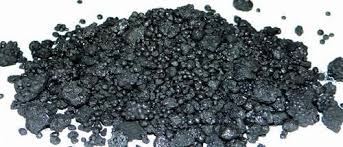
Petroleum, complex mixture of hydrocarbons that occur in Earth in liquid, gaseous, or solid form. The term is often restricted to the liquid form, commonly called crude oil, but, as a technical term, petroleum also includes natural gas and the viscous or solid form known as bitumen, which is found in tar sands. The liquid and gaseous phases of petroleum constitute the most important of the primary fossil fuels. Liquid and gaseous hydrocarbons are so intimately associated in nature that it has become customary to shorten the expression “petroleum and natural gas” to “petroleum” when referring to both. Crude oil consists of a closely related series of complex hydrocarbon compounds that range from gasoline to heavy solids. The various mixtures that constitute crude oil can be separated by distillation under increasing temperatures into such components as (from light to heavy) gasoline, kerosene, gas oil, lubricating oil, residual fuel oil, bitumen, and paraffin. Crude oils vary greatly in their chemical composition. Because they consist of mixtures of thousands of hydrocarbon compounds, their physical properties such as specific gravity, colour, and viscosity (resistance of a fluid to a change in shape)  also vary widely.

For more details: http://sciaeon.org/geology-and-geoscience/home

Submit your manuscript: http://sciaeon.org/submit-paper

Contact us: geology@sciaeonopenaccess.com
Gasoline

Gasoline, also spelled gasolene, also called gas or petrol, mixture of volatile, flammable liquid hydrocarbons derived from petroleum and used as fuel for internal-combustion engines. It is also used as a solvent for oils and fats. Originally a by-product of the petroleum industry, gasoline became the preferred automobile fuel because of its high energy of combustion and capacity to mix readily with air in a carburetor. Gasoline was at first produced by distillation, simply separating the volatile, more valuable fractions of crude petroleum. Later processes, designed to raise the yield of gasoline from crude oil, split large molecules into smaller ones by processes known as cracking. Thermal cracking, employing heat and high pressures the application of catalysts that facilitate chemical reactions producing more gasoline. Other methods used to improve the quality of gasoline and increase its supply include polymerization, converting gaseous olefins, such as propylene and butylene, into larger molecules in the gasoline range; alkylation, a process combining an olefin and a paraffin such as isobutane; isomerization, the conversion of straight-chain hydrocarbons to branched-chain hydrocarbons; and reforming, using either heat or a catalyst to rearrange the molecular structure. Gasoline is a complex mixture of hundreds of different hydrocarbons. Most are saturated and contain 4 to 12 carbon atoms per molecule. Gasoline used in automobiles boils mainly between 30° and 200° C, the blend being adjusted to altitude and season. Aviation gasoline contains smaller proportions of both the less-volatile and more-volatile components than automobile gasoline.

For more details: http://sciaeon.org/geology-and-geoscience/home

Submit your manuscript: http://sciaeon.org/submit-paper

Contact us: geology@sciaeonopenaccess.com
Fluid Catalytic Cracking

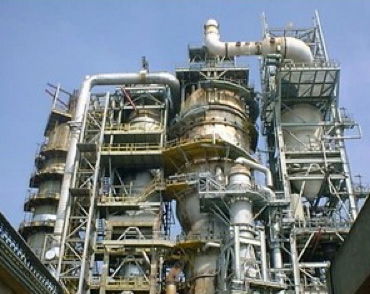
A modern fluid catalytic cracker employs a finely divided solid catalyst that has properties analogous to a liquid when it is agitated by air or oil vapours. In this arrangement a reactor and regenerator are located side by side. The oil feed is vaporized when it meets the hot catalyst at the feed-injection point, and the vapours flow upward through the riser reactor at high velocity, providing a fluidizing effect for the catalyst particles. The catalytic reaction occurs exclusively in the riser reactor. The catalyst then passes into the cyclone vessel, where it is separated from reactor hydrocarbon products. As the cracking reactions proceed, carbon is deposited on the catalyst particles. Since these deposits impair the reaction efficiency, the catalyst must be continuously withdrawn from the reaction system. Unit product vapours pass out of the top of the reactor through cyclone separators, but the catalyst is removed by centrifugal force and dropped back into the stripper section. In the stripping section, hydrocarbons are removed from the spent catalyst with steam, and the catalyst is transferred through the stripper standpipe to the regenerator vessel, where the carbon is burned with a current of air. The high temperature of the regeneration process heats the catalyst to the desired reaction temperature for recontacting fresh feed into the unit. In order to maintain activity, a small amount of fresh catalyst is added to the system from time to time, and a similar amount is withdrawn.

For more details: http://sciaeon.org/geology-and-geoscience/home

Submit your manuscript: http://sciaeon.org/submit-paper

Contact us: geology@sciaeonopenaccess.com
Ocean Acidification

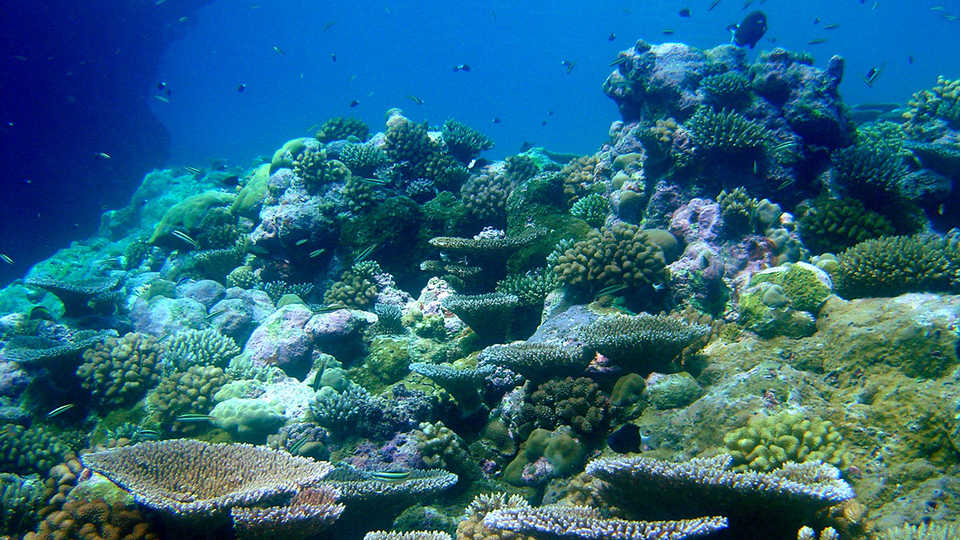
Ocean acidification, the worldwide reduction in the pH of seawater as a consequence of the absorption of large amounts of carbon dioxide by the oceans. Ocean acidification is largely the result of loading Earth’s atmosphere with large quantities of CO2, produced by vehicles and industrial and agricultural processes. Marine scientists are concerned that the process of ocean acidification constitutes a threat to sea life and to the cultures that depend on the ocean for their food and livelihood. Increases in ocean acidity reduce the concentration of carbonate ions and the availability of aragonite in seawater. Marine scientists expect that coral, shellfish, and other marine calcifiers will be less able to obtain the raw materials that they use to build and maintain their skeletons and shells. These scientists also note that rising ocean acidity presents a number of other physiological problems to different groups of marine organisms and those problems could threaten the stability of marine food chains. The acidity of any solution is determined by the relative concentration of hydrogen ions. A larger concentration of H+ ions in a solution corresponds to higher acidity, which is measured as a lower pH. When CO2 dissolves in seawater, it creates carbonic acid and liberates H+, which subsequently reacts with carbonate ions and aragonite to form bicarbonate. At present seawater is extremely rich in dissolved carbonate minerals. However, as ocean acidity increases carbonate ion concentrations fall.

For more details: http://sciaeon.org/geology-and-geoscience/home

Submit your manuscript: http://sciaeon.org/submit-paper

Contact us: geology@sciaeonopenaccess.com
Microbial Ecology

Microbiology as a science, water was suspected of being a carrier of disease-producing organisms. When an epidemic of cholera was proved to have had its origin in polluted water, that contaminated water was considered more seriously as a source of disease. Since that time there has been continuous research on the microbiology of public water supplies, including the development of laboratory procedures to determine whether the water is potable, or safe for human consumption. At the same time, purification procedures for these supplies have emerged. The principal operations employed in a municipal water-purification plant are sedimentation, filtration, and chlorination. Each of these operations removes or kills microorganisms, and the microbiological quality of the treated water is monitored at frequent intervals. There is a growing interest in other ecological aspects of aquatic microbiology, such as the role of microbes in global warming and oxygen production. Experimental approaches are being developed to study the complex biology and ecology of biofilms and microbial mats. These assemblages of microbes and their products, while potentially useful in several ways, are complex. In many instances the microbial flora involved must sometimes be studied in its natural environment because the environment cannot be reproduced in the laboratory.

For more details: http://sciaeon.org/geology-and-geoscience/home

Submit your manuscript: http://sciaeon.org/submit-paper

Contact us: geology@sciaeonopenaccess.com

Geochemical cycle

Geochemical cycle, developmental path followed by individual elements or groups of elements in the crustal and subcrustal zones of the Earth and on its surface. The concept of a geochemical cycle encompasses geochemical differentiation and heat-assisted, elemental recombination processes. For the lithosphere, the geochemical cycle begins with the crystallization of a magma at the surface or at depth. In turn, surface alteration and weathering break down the igneous rock, a process that is followed by the transportation and deposition of the resulting material as sediment. This sediment becomes lithified and eventually metamorphosed until melting occurs and new magma is generated. This ideal cycle can be interrupted at any point. Each element may be affected differently as the cycle progresses. During the weathering of an igneous rock, for example, minerals containing iron, magnesium, and calcium break down and are carried in solution, but silicon-rich quartz and feldspar are mainly transported as sediment. The resultant sedimentary rocks are dominated by quartz and feldspar, whereas others are dominated by calcium and magnesium owing to the precipitation of calcium or magnesium carbonates. Such elements as sodium remain in solution until precipitated under extreme conditions. As partial melting of sedimentary rocks begins, elements become separated according to melting properties; volatiles are released to the atmosphere, and physical movement of chemically separated bodies occurs. While the geochemical cycle over a short term is in a seemingly steady state, long-term, or secular, changes occur. Thus, for example, continents and oceans have evolved over geologic time.

For more details: http://sciaeon.org/geology-and-geoscience/home

Submit your manuscript: http://sciaeon.org/submit-paper

Contact us: geology@sciaeonopenaccess.com

Ocean Chemistry

The chemical properties of the ocean are important to understand because the marine environment supports the greatest abundance of life on earth. This life is largely made up of the same chemicals that comprise the ocean-water and salts. Water is present in the marine environment as a liquid, a solid, and a gas regulated by temperature. Heat causes the water molecules to move. The greater the heat, the faster they move until the movement causes the hydrogen bonds to break converting liquid water to gas. Water turns to vapor at 100° C. Cold slows down the movement of water molecules and their density increases. As water gets colder the hydrogen bonds override the motion of the molecules and water begins to crystallize forming water’s solid state-ice. Ice is formed at 0°C. Ice is, however, less dense than liquid water because it expands as it freezes causing the molecules to grow farther apart. The decrease in density causes ice to float. Density differences between different masses of seawater are one of the major driving forces of deep-sea circulation.

For more details: http://sciaeon.org/geology-and-geoscience/home

Submit your manuscript: http://sciaeon.org/submit-paper

Contact us: geology@sciaeonopenaccess.com

Planetary science

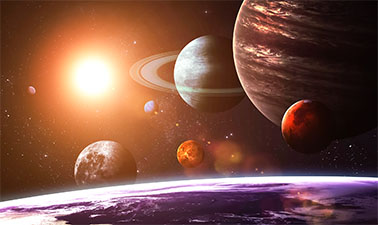
Planetary science or, more rarely, planetology, is the scientific study of planets, moons, and planetary systems and the processes that form them. It studies objects ranging in size from micrometeoroids to gas giants, aiming to determine their composition, dynamics, formation, interrelations and history. It is a strongly interdisciplinary field, originally growing from astronomy and earth science, but which now incorporates many disciplines, including planetary geology, cosmochemistry, atmospheric science, oceanography, hydrology, theoretical planetary science, glaciology, and exoplanetology. Allied disciplines include space physics, when concerned with the effects of the Sun on the bodies of the Solar System, and astrobiology. There are interrelated observational and theoretical branches of planetary science. Observational research can involve a combination of space exploration, predominantly with robotic spacecraft missions using remote sensing, and comparative, experimental work in Earth-based laboratories. The theoretical component involves considerable computer simulation and mathematical modelling.

For more details: http://sciaeon.org/geology-and-geoscience/home

Submit your manuscript: http://sciaeon.org/submit-paper

Contact us: geology@sciaeonopenaccess.com

Design a site like this with WordPress.com
Get started