Geologic Hazard

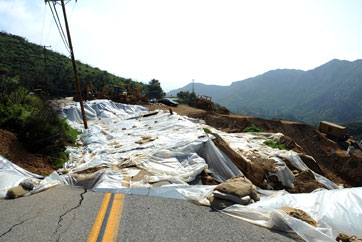
A geologic hazard is an extreme natural events in the crust of the earth that pose a threat to life and property, for example, earthquakes, volcanic eruptions, tsunamis and landslides. A geologic hazard is one of several types of adverse geologic conditions capable of causing damage or loss of property and life. These hazards consist of sudden phenomena and slow phenomena: Sudden phenomena include: avalanches (snow, rock, or air & snow) and its runout. Volcanic eruptions are one of the planet’s most dramatic and violent natural hazards. They typically occur 50 to 60 times each year, when magma rises through cracks or weaknesses in Earth’s crust.
For more details:
http://sciaeon.org/geology-and-geoscience/home

Submit your manuscript:
http://sciaeon.org/submit-paper

Contact Us: geology@sciaeonopenaccess.com
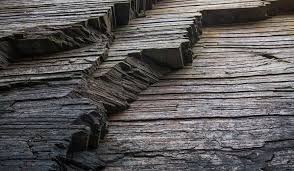
Stratigraphy

Stratigraphy is a branch of geology concerned with the study of rock layers and layering. It is primarily used in the study of sedimentary and layered volcanic rocks. Stratigraphy has two related subfields: lithostratigraphy and biostratigraphy. The Principles of Stratigraphy. The geologic principle that states that in horizontal layers of sedimentary rock, each layer is older than the layer above it and younger than the layer below it. The geologic principle that states that sediments are deposited as essentially horizontal beds.

For more:
http://sciaeon.org/geology-and-geoscience/home

Submit your manuscript:
http://sciaeon.org/submit-paper

Contact us: geology@sciaeonopenaccess.com

Geoscience

Geoscience is the study of the Earth – its oceans, atmosphere, rivers and lakes, ice sheets and glaciers, soils, its complex surface, rocky interior, and metallic core. This includes many aspects of how living things, including humans, interact with the Earth. Geoscience has many tools and practices of its own but is intimately linked with the biological, chemical, and physical sciences. Geoscience investigates the past, measures the present, and models the future behavior of our planet. But it also involves the study of other planets, asteroids, and solar systems, both to better understand the Earth and to expand our knowledge of the universe.

For more:
http://sciaeon.org/geology-and-geoscience/home

Submit your manucsript:
http://sciaeon.org/submit-paper

Contact us: geology@sciaeonopenaccess.com

Environmental Toxicology

Environmental toxicology is a multidisciplinary field of science concerned with the study of the harmful effects of various chemical, biological and physical agents on living organisms. Ecotoxicology is a sub discipline of environmental toxicology concerned with studying the harmful effects of toxicants at the population and ecosystem levels. Harmful effects of such chemical and biological agents as toxicants from pollutants, insecticides, pesticides, and fertilizers can affect an organism and its community by reducing its species diversity and abundance. Such changes in population dynamics affect the ecosystem by reducing its productivity and stability.

For more details:
http://sciaeon.org/geology-and-geoscience/home

Submit your manuscript:
http://sciaeon.org/submit-paper

Contact us: geology@sciaeonopenaccess.com

Soil Science

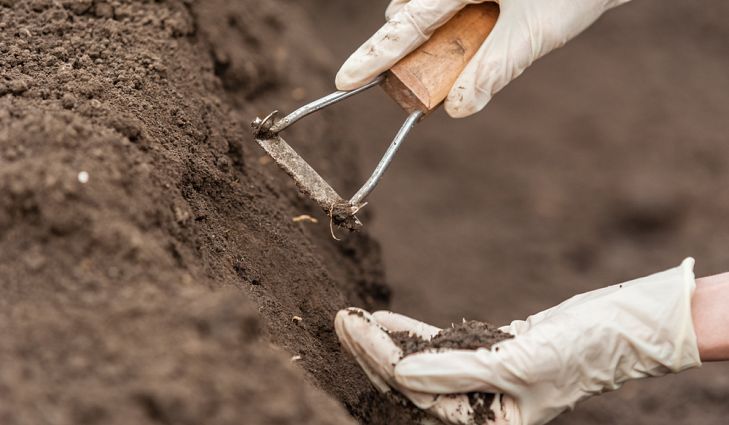
Soil science is the study of soil as a natural resource on the surface of the Earth including soil formation, classification and mapping; physical, chemical, biological, and fertility properties of soils; and these properties in relation to the use and management of soils. Sometimes terms which refer to branches of soil science, such as pedology (formation, chemistry, morphology, and classification of soil) and edaphology (how soils interact with living things, especially plants), are used as if synonymous with soil science. The diversity of names associated with this discipline is related to the various associations concerned. Indeed, engineers, agronomists, chemists, geologists, physical geographers, ecologists, biologists, microbiologists, silviculturists, sanitarians, archaeologists, and specialists in regional planning, all contribute to further knowledge of soils and the advancement of the soil sciences.

For more details:
http://sciaeon.org/geology-and-geoscience/home

Submit your manuscript:
http://sciaeon.org/submit-paper

Contact us: geology@sciaeonopenaccess.com

Global Warming

Global warming, the phenomenon of increasing average air temperatures near the surface of Earth over the past one to two centuries. Climate scientists have since the mid-20th century gathered detailed observations of various weather phenomena (such as temperatures, precipitation, and storms) and of related influences on climate (such as ocean currents and the atmosphere’s chemical composition). These data indicate that Earth’s climate has changed over almost every conceivable timescale since the beginning of geologic time and that the influence of human activities since at least the beginning of the Industrial Revolution has been deeply woven into the very fabric of climate change.

For more details:
http://sciaeon.org/geology-and-geoscience/home

Submit your manuscript of Global Warming:
http://sciaeon.org/submit-paper

Contact us: geology@sciaeonopenaccess.com

Design a site like this with WordPress.com
Get started