Thermal Pollution

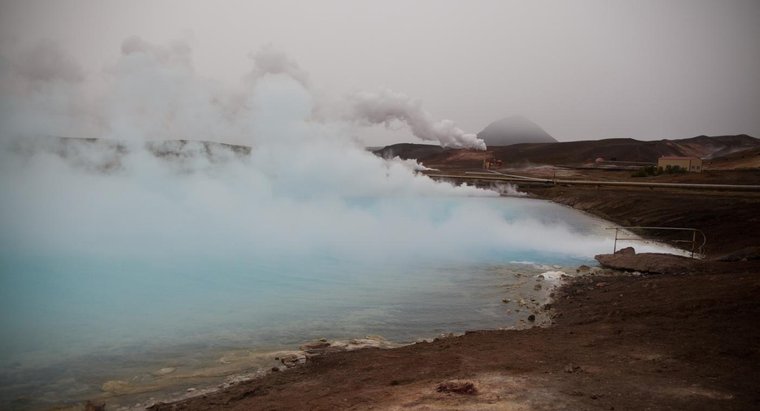
Thermal pollution is the degradation of water quality by any process that changes ambient water temperature. A common cause of thermal pollution is the use of water as a coolant by power plants and industrial manufacturers. The term thermal pollution has been used to indicate the detrimental effects of heated effluent discharge by various power plants. It denotes the impairment of quality and deterioration of aquatic and terrestrial environment by various industrial plants like thermal, atomic, nuclear, coal-fired plants, oil field generators, factories, and mills. The discharged effluents of these sources have a higher temperature than the intake water that reduces the concentration of oxygen from the water which causes the deleterious effects on the marine ecosystem.
For more details:
http://sciaeon.org/geology-and-geoscience/home

Submit your manuscript:
http://sciaeon.org/submit-paper

Contact us: geology@sciaeonopenaccess.com

Hydrocarbons

Hydrocarbons are found in geological formations consisting of strata or layers of rocks. Specifically, they are formed from decomposed organic material, that bonds with hydrogen, which is a component of water. Such hydrocarbons can take the form of either liquids (e.g. petroleum) or gas (natural gas). There are also intermediate products such as propane or butane that can easily take either liquid or gas form at differing temperatures, but at temperature ranges that are normal for human existence. Oil and gas both form when organic matter is buried under anoxic conditions, such that it isn’t oxidised and subsequently mineralised to the elemental components of the hydrocarbons.

For more details:
http://sciaeon.org/geology-and-geoscience/home

Submit your manuscript:
http://sciaeon.org/submit-paper

Contact us: geology@sciaeonopenaccess.com
Flux

Flux describes any effect that appears to pass or travel through a surface or substance. Flux is a vector quantity, describing the magnitude and direction of the flow of a substance or property. flux may be a single vector, or it may be a vector field of position. In the latter case flux can readily be integrated over a surface. By contrast, according to the electromagnetism, flux is the integral over a surface; it makes no sense to integrate flux for one would be integrating over a surface twice. Their names in accordance with the quote would be surface integral of electric flux and surface integral of magnetic flux, in which case electric flux would instead be defined as electric field and magnetic flux defined as magnetic field.

For more details:
http://sciaeon.org/geology-and-geoscience/home

Submit your manuscript:
http://sciaeon.org/submit-paper

Contact us: geology@sciaeonopenaccess.com
Earth Crust

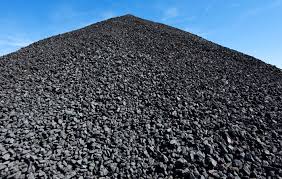
The crust of the Earth is composed of a great variety of igneous, metamorphic, and sedimentary rocks. The crust is underlain by the mantle. The upper part of the mantle is composed mostly of peridotite, a rock denser than rocks common in the overlying crust. The boundary between the crust and mantle is conventionally placed at the Mohorovicic discontinuity, a boundary defined by a contrast in seismic velocity. Earth’s crust occupies less than 1% of Earth’s volume. The oceanic crust of the Earth is different from its continental crust and it is mostly composed of less dense rocks than is the oceanic crust. Some of these less dense rocks, such as granite, are common in the continental crust but rare to absent in the oceanic crust. The crust and underlying relatively rigid mantle make up the lithosphere. Because of convection in the underlying plastic, although non-molten, upper mantle and asthenosphere, the lithosphere is broken into tectonic plates that move.

For more details:
http://sciaeon.org/geology-and-geoscience/home

Submit your manuscript:
http://sciaeon.org/submit-paper

Contact us: geology@sciaeonopenaccess.com
Gravity

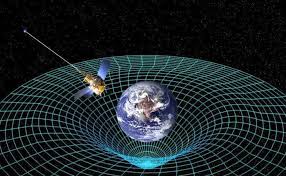
Gravity, also called gravitation, in mechanics, the universal force of attraction acting between all matter. It is by far the weakest known force in nature and thus plays no role in determining the internal properties of everyday matter. On the other hand, through its long reach and universal action, it controls the trajectories of bodies in the solar system and elsewhere in the universe and the structures and evolution of stars, galaxies, and the whole cosmos. On Earth all bodies have a weight, or downward force of gravity, proportional to their mass, which Earth’s mass exerts on them. Gravity is measured by the acceleration that it gives to freely falling objects. At Earth’s surface the acceleration of gravity is about 9.8 metres (32 feet) per second per second. Thus, for every second an object is in free fall, its speed increases by about 9.8 metres per second. At the surface of the Moon the acceleration of a freely falling body is about 1.6 metres per second per second.

For more details:
http://sciaeon.org/geology-and-geoscience/home

Submit your manuscript:
http://sciaeon.org/submit-paper

Contact us: geology@sciaeonopenaccess.com
Economic Geology

Economic geology is concerned with earth materials that can be used for economic and industrial purposes. These materials include precious and base metals, nonmetallic minerals, construction-grade stone, petroleum minerals, coal, and water. Economic geology is a subdiscipline of the geosciences. The term commonly refers to metallic mineral deposits and mineral resources. The techniques employed by other earth science disciplines might all be used to understand, describe, and exploit an ore deposit. Economic geology is studied and practiced by geologists. Economic geology may be of interest to other professions such as engineers, environmental scientists, and conservationists because of the far-reaching impact that extractive industries have on society, the economy, and the environment.

For more details:
http://sciaeon.org/geology-and-geoscience/home

Submit your manuscript:
http://sciaeon.org/submit-paper

Contact us: geology@sciaeonopenaccess.com

Fluid Dynamics

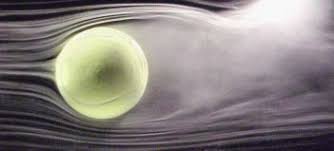
Fluid Flow is a part of fluid mechanics and deals with fluid dynamics. Fluids such as gases and liquids in motion is called as fluid flow. Motion of a fluid subjected to unbalanced forces. This motion continues as long as unbalanced forces are applied. Fluid flow has all kinds of aspects-steady or unsteady, compressible or incompressible, viscous or nonviscous, and rotational or irrotational, to name a few. Some of these characteristics reflect properties of the liquid itself, and others focus on how the fluid is moving. Steady or Unsteady Flow: Fluid flow can be steady or unsteady, depending on the fluid’s velocity.

For more details:
http://sciaeon.org/geology-and-geoscience/home

Submit your manuscript:
http://sciaeon.org/submit-paper

Contact us: geology@sciaeonopenaccess.com

Edaphology

Edaphology is one of two soil sciences which also consists of Pedology. Specifically, edaphology is the study in how soils influence and interact on/with living things, especially those of plants. It is the study of the ecological relationship soil has with land cultivation practices and plants. For the cultivation of land, edaphology also focuses on the conservation of soils and possible loss or erosion due to certain practices. Viticulturists often rely on edaphologists to assist and advise on the initial planting and planning of a vineyard including vine species selection for the type of soil available.

For more details:
http://sciaeon.org/geology-and-geoscience/home

Submit your manuscript:
http://sciaeon.org/submit-paper

Contact us: geology@sciaeonopenaccess.com

Space Probe

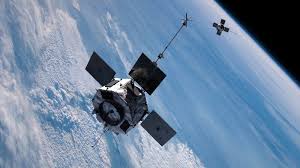
A space probe is a robotic spacecraft that does not orbit Earth, but instead, explores further into outer space. A space probe may approach the Moon; travel through interplanetary space; flyby, orbit, or land on other planetary bodies; or enter interstellar space. Once a probe has left the vicinity of Earth, its trajectory will likely take it along an orbit around the Sun similar to the Earth’s orbit. To reach another planet, the simplest practical method is a Hohmann transfer orbit. More complex techniques, such as gravitational slingshots, can be more fuel-efficient, though they may require the probe to spend more time in transit. Some high Delta-V missions can only be performed, within the limits of modern propulsion, using gravitational slingshots. A technique using very little propulsion, but requiring a considerable amount of time, is to follow a trajectory on the Interplanetary Transport Network.

For more details:
http://sciaeon.org/geology-and-geoscience/home

Submit your manuscript:
http://sciaeon.org/submit-paper

Contact us: geology@sciaeonopenaccess.com

Design a site like this with WordPress.com
Get started