Water pollution, the release of substances into subsurface groundwater or into lakes, streams, rivers, estuaries, and oceans to the point where the substances interfere with beneficial use of the water or with the natural functioning of ecosystems. In addition to the release of substances, such as chemicals or microorganisms, water pollution may also include the release of energy, in the form of radioactivity or heat, into bodies of water. Water bodies can be polluted by a wide variety of substances, including pathogenic microorganisms, putrescible organic waste, plant nutrients, toxic chemicals, sediments, heat, petroleum (oil), and radioactive substances. Several types of water pollutants are considered below.
Noise pollution, unwanted or excessive sound that can have deleterious effects on human health and environmental quality. Noise pollution is commonly generated inside many industrial facilities and some other workplaces, but it also comes from highway, railway, and airplane traffic and from outdoor construction activities. Sound waves are vibrations of air molecules carried from a noise source to the ear. Sound is typically described in terms of the loudness and the pitch of the wave. Loudness is measured in logarithmic units called decibels. The normal human ear can detect sounds that range between 0 dB and about 140 dB, with sounds between 120dB and 140 dB causing pain. The ambient SPL in a library is about 35 dB, while that inside a moving bus or subway train is roughly 85 dB; building construction activities can generate SPLs as high as 105 dB at the source. SPLs decrease with distance from the source. The rate at which sound energy is transmitted, called sound intensity, is proportional to the square of the SPL. Because of the logarithmic nature of the decibel scale, an increase of 10 dB represents a 10-fold increase in sound intensity, an increase of 20 dB represents a 100-fold increase in intensity, a 30-dB increase represents a 1,000-fold increase in intensity, and so on. When sound intensity is doubled, on the other hand, the SPL increases by only 3 dB. For example, if a construction drill causes a noise level of about 90 dB, then two identical drills operating side by side will cause a noise level of 93 dB. On the other hand, when two sounds that differ by more than 15 dB in SPL are combined, the weaker sound is masked by the louder sound. For example, if an 80-dB drill is operating next to a 95-dB dozer at a construction site, the combined SPL of those two sources will be measured as 95 dB; the less intense sound from the compressor will not be noticeable.
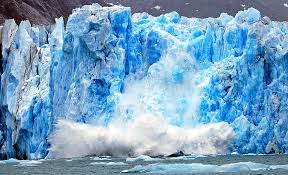
Ice age, also called glacial age, any geologic period during which thick ice sheets cover vast areas of land. Such periods of large-scale glaciation may last several million years and drastically reshape surface features of entire continents. A number of major ice ages have occurred throughout Earth history. The earliest known took place during Precambrian time dating back more than 570 million years. The most recent periods of widespread glaciation occurred during the Pleistocene Epoch. A lesser, recent glacial stage called the Little Ice Age began in the 16th century and advanced and receded intermittently over three centuries . Its maximum development was reached about 1750, at which time glaciers were more widespread on Earth than at any time since the last major ice age ended about 11,700 years ago.
The alkaline-earth elements are highly metallic and are good conductors of electricity. They have a gray-white lustre when freshly cut but tarnish readily in air, particularly the heavier members of the group. Beryllium is sufficiently hard to scratch glass, but barium is only slightly harder than lead. The melting points (mp) and boiling points (bp) of the group are higher than those of the corresponding alkali metals; they vary in an irregular fashion, magnesium having the lowest and bp 1,090 °C and beryllium the highest. The elements crystallize in one or more of the three regular close-packed metallic crystal forms.
Trace element, also called micronutrient, in biology, any chemical element required by living organisms in minute amounts usually as part of a vital enzyme. Exact needs vary among species, but commonly required plant trace elements include copper, boron, zinc, manganese, and molybdenum. The term trace element also appears in geology, where it is used to describe elements other than oxygen, silicon, aluminum, iron, calcium, sodium, potassium and magnesium that occur in minuscule concentrations in rocks that is, in concentrations of less than 0.1 percent by weight. Trace element concentrations are typically expressed in parts per million.
Desalination, also called desalting, removal of dissolved salts from seawater and in some cases from the brackish waters of inland seas, highly mineralized groundwaters, and municipal wastewaters. This process renders such otherwise unusable waters fit for human consumption, irrigation, industrial applications, and various other purposes. Existing desalination technology requires a substantial amount of energy, usually in the form of fossil fuels, and so the process is expensive. For this reason it is generally used only where sources of fresh water are not economically available. In addition, the amount of greenhouse gas emissions and brine wastewater generated by desalination plants pose significant environmental challenges. Desalination methods can utilize either thermal processes or membrane processes. Multistage flash distillation is a thermal process for desalting relatively large quantities of seawater. Based on the fact that the boiling temperature of water is lowered as air pressure drops, this process is carried out in a series of closed tanks set at progressively lower pressures. When preheated seawater enters the first stage, some of it rapidly boils, forming vapour that is condensed into fresh water on heat-exchange tubes. Fresh water is collected in trays as the remaining seawater flows into the next stage, where it also flashes, and the process is continued.
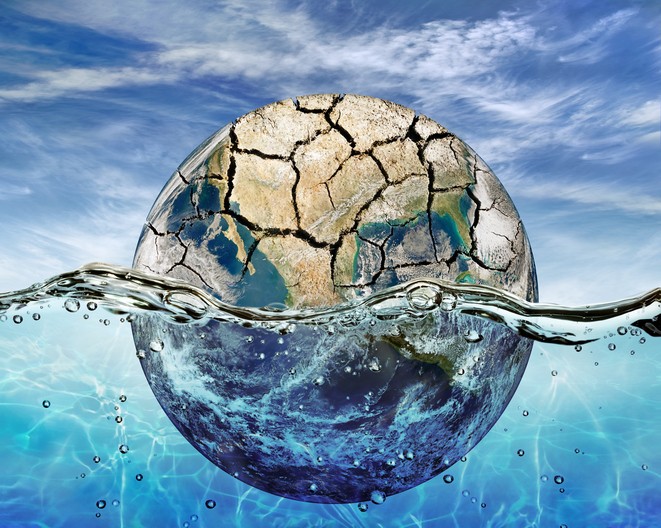
Water scarcity, insufficient freshwater resources to meet the human and environmental demands of a given area. Water scarcity is inextricably linked to human rights, and sufficient access to safe drinking water is a priority for global development. There are two general types of water scarcity: physical and economic. Physical, or absolute, water scarcity is the result of a region’s demand outpacing the limited water resources found there. According to the Food and Agricultural Organization (FAO) of the United Nations, around 1.2 billion people live in areas of physical scarcity; many of these people live in arid or semi-arid regions. Physical water scarcity can be seasonal; an estimated two-thirds of the world’s population lives in areas subject to seasonal water scarcity at least one month of the year. The number of people affected by physical water scarcity is expected to grow as populations increase and as weather patterns become more unpredictable and extreme.
Precambrian time is divided into the Archean Eon and Proterozoic Eon. After the Precambrian, geologic time intervals are commonly subdivided on the basis of the fossil record. The paucity of Precambrian fossils, however, precludes the creation of small-scale subdivisions in this time period. Instead, relative chronologies of events have been produced for different regions based on such field relationships as unconformities and crosscutting dikes. These field relationships, combined with the isotopic age determinations of specific rocks, allow for some correlation between neighbouring regions. The International Commission on Stratigraphy (ISC) and International Union of Geological Sciences (IUGS) divide the Archean Eon into the Eoarchean, Paleoarchean, Mesoarchean, and Neoarchean eras. Likewise, they divide the Proterozoic Eon into the Paleoproterozoic, Mesoproterozoic, and Neoproterozoic eras. These definitions are based on isotopic age determinations. The Archean and Proterozoic eons within Precambrian time are very different and must be considered separately. The Archean-Proterozoic boundary constitutes a major turning point in Earth history. Before that time the crust of the Earth was in the process of growing, and so there were no large, stable continents. Afterward, when such continents had emerged, orogenic belts were able to form on the margins of and between continental blocks.
Green chemistry, also called sustainable chemistry, an approach to chemistry that endeavours to prevent or reduce pollution. This discipline also strives to improve the yield efficiency of chemical products by modifying how chemicals are designed, manufactured, and used. To help define a more specific research agenda, the 12 principles of green chemistry: Prevent waste wherever possible; Promote atom economy (that is, maximize the efficiency of production so that fewer by-products are made during the manufacture of the final product); Synthesize less-hazardous chemical by-products; Design safer, less-toxic chemical products; Use safer solvents and auxiliaries in chemical processes; Design energy-efficient chemical-manufacturing processes; Use renewable feedstocks; Reduce or avoid the production of derivatives; Use catalysts (most of which require fewer materials to carry out a chemical reaction); Design chemicals that break down into harmless products after they are used; Promote the development of real-time analysis of chemical products before hazardous substances can form; Promote inherently safer chemistry to prevent accidents from occurring.
Air pollution, release into the atmosphere of various gases, finely divided solids, or finely dispersed liquid aerosols at rates that exceed the natural capacity of the environment to dissipate and dilute or absorb them. These substances may reach concentrations in the air that cause undesirable health, economic, or aesthetic effects. Clean, dry air consists primarily of nitrogen and oxygen-78 percent and 21 percent respectively, by volume. The remaining 1 percent is a mixture of other gases, mostly argon, along with trace amounts of carbon dioxide, methane, hydrogen, helium, and more. Water vapour is also a normal, though quite variable, component of the atmosphere, normally ranging from 0.01 to 4 percent by volume; under very humid conditions the moisture content of air may be as high as 5 percent. The gaseous air pollutants of primary concern in urban settings include sulfur dioxide, nitrogen dioxide, and carbon monoxide; these are emitted directly into the air from fossil fuels such as fuel oil, gasoline, and natural gas that are burned in power plants, automobiles, and other combustion sources. Ozone is also a gaseous pollutant; it forms in the atmosphere via complex chemical reactions occurring between nitrogen dioxide and various volatile organic compounds. Airborne suspensions of extremely small solid or liquid particles called particulates, especially those less than 10 micrometres in size, are significant air pollutants because of their very harmful effects on human health. They are emitted by various industrial processes, coal- or oil-burning power plants, residential heating systems, and automobiles. Lead fumes are particularly toxic and are an important pollutant of many diesel fuels.



 Journal of Geology and Geoscience