Solid Earth

Earth tide, deformation of the solid Earth as it rotates within the gravitational fields of the Sun and Moon. Earth tides are similar to ocean tides. The Earth deforms because it has a certain degree of elasticity; were it perfectly rigid, there would be no Earth tides. Several tidal components mathematically can be shown to exist, but only four are large enough to be generally measurable; these are the lunar diurnal, the lunar semidiurnal, the solar diurnal, and the solar semidiurnal tides. Diurnal tides have a period of approximately 24 hours, and semidiurnal tides have a period of approximately 12 hours. The actual amplitudes of these tides in terms of vertical movement of the surface of the solid Earth are about one foot or less.

For more details: http://sciaeon.org/geology-and-geoscience/home

Submit your manuscript: http://sciaeon.org/submit-paper

Contact us: geology@sciaeonopenaccess.com

Ionosphere

Ionosphere and magnetosphere, regions of Earth’s atmosphere in which the number of electrically charged particles-ions and electrons-are large enough to affect the propagation of radio waves. The charged particles are created by the action of extraterrestrial radiation on neutral atoms and molecules of air. The ionosphere begins at a height of about 50 km above the surface, but it is most distinct and important above 80 km. In the upper regions of the ionosphere, beginning several hundred kilometres above Earth’s surface and extending tens of thousands of kilometres into space is the magnetosphere, a region where the behaviour of charged particles is strongly affected by the magnetic fields of Earth and the Sun. It is in the lower part of the magnetosphere that overlaps with the ionosphere that the spectacular displays of the aurora borealis and aurora australis take place. The magnetosphere also contains the Van Allen radiation belts, where highly energized protons and electrons travel back and forth between the poles of Earth’s magnetic field.

For more details: http://sciaeon.org/geology-and-geoscience/home

Submit your manuscript: http://sciaeon.org/submit-paper

Contact us: geology@sciaeonopenaccess.com
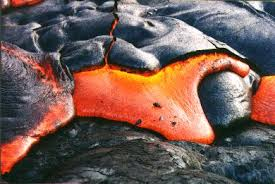
Igneous petrology

Igneous petrology is concerned with the identification, classification, origin, evolution, and processes of formation and crystallization of the igneous rocks. Most of the rocks available for study come from the Earth’s crust, but a few, such as eclogites, derive from the mantle. The scope of igneous petrology is very large because igneous rocks make up the bulk of the continental and oceanic crusts and of the mountain belts of the world, which range in age from early Archean to Neogene, and they also include the high-level volcanic extrusive rocks and the plutonic rocks that formed deep within the crust.

For more details: http://sciaeon.org/geology-and-geoscience/home

Submit your manuscript: http://sciaeon.org/submit-paper

Contact us: geology@sciaeonopenaccess.com

Design a site like this with WordPress.com
Get started