
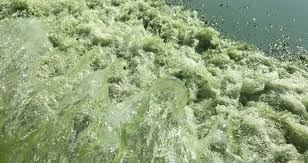
Microbiology as a science, water was suspected of being a carrier of disease-producing organisms. When an epidemic of cholera was proved to have had its origin in polluted water, that contaminated water was considered more seriously as a source of disease. Since that time there has been continuous research on the microbiology of public water supplies, including the development of laboratory procedures to determine whether the water is potable, or safe for human consumption. At the same time, purification procedures for these supplies have emerged. The principal operations employed in a municipal water-purification plant are sedimentation, filtration, and chlorination. Each of these operations removes or kills microorganisms, and the microbiological quality of the treated water is monitored at frequent intervals. There is a growing interest in other ecological aspects of aquatic microbiology, such as the role of microbes in global warming and oxygen production. Experimental approaches are being developed to study the complex biology and ecology of biofilms and microbial mats. These assemblages of microbes and their products, while potentially useful in several ways, are complex. In many instances the microbial flora involved must sometimes be studied in its natural environment because the environment cannot be reproduced in the laboratory.
For more details: http://sciaeon.org/geology-and-geoscience/home
Submit your manuscript: http://sciaeon.org/submit-paper
Contact us: geology@sciaeonopenaccess.com
 Journal of Geology and Geoscience